Balance Sheet
Balance Sheet
Definition Activities Importance Aspects Concepts Action
Overview of Balance Sheet
Definition of
Balance Sheet

What is a Balance Sheet? The Balance Sheet, also known as the Statement of Financial Position, is one of the three core financial statements in accounting. It provides a snapshot of a company’s financial health at a specific point in time, detailing what it owns (Assets), what it owes (Liabilities), and the owners’ stake (Equity). The structure is based entirely on the fundamental Accounting Equation: Assets = Liabilities + Equity. Common assets include cash, Accounts Receivable, and equipment. Liabilities might include Accounts Payable and loans. Equity includes owner contributions and Retained Earnings. Unlike the Income Statement which covers a period, the Balance Sheet reflects the company’s position on a single day (e.g., as of December 31st). You can view an example format on our Balance Sheet report page.
Activities Related to
Balance Sheet
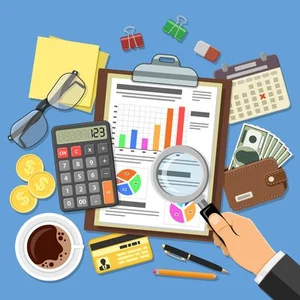
Here is a list of Balance Sheet related activities: Preparing period-end financial statements, Analyzing a company’s solvency and capital structure, Assessing short-term liquidity (using current assets and liabilities), Calculating key financial ratios (like Debt-to-Equity or Current Ratio), Applying for business loans or seeking investment (requires presenting the Balance Sheet), Making strategic financial decisions regarding debt or equity financing, and Performing accurate bookkeeping to ensure reliable source data.
These activities are integral to creating, interpreting, and utilizing the Balance Sheet effectively.
The Importance of
Balance Sheet
The Balance Sheet is critically important for small business owners as it provides essential insights into the financial stability and structure of the company. It clearly shows what resources the business controls (Assets) and how those resources are financed (through Liabilities or Equity). Analyzing the Balance Sheet helps assess the company’s ability to meet its short-term obligations (liquidity) and long-term debts (solvency). It is a key document requested by lenders, investors, and other stakeholders. Maintaining an accurate Balance Sheet through consistent and correct bookkeeping services is fundamental for sound financial management and strategic planning.
Key Aspects of
Balance Sheet

Snapshot in Time
Unlike statements covering a period (like the Income Statement), the Balance Sheet represents the company’s financial position on a specific date.
Accounting Equation Foundation
The report is structured around Assets = Liabilities + Equity, meaning the two sides (or sections) must always be equal, reflecting the double-entry bookkeeping system.
Financial Position Indicator
It reveals how a company’s assets are financed and provides insights into its capital structure, leverage, liquidity, and overall financial health.
Concepts Related to
Balance Sheet

The Balance Sheet is intrinsically linked to the Accounting Equation. Its main components are Assets (current and non-current), Liabilities (current and long-term), and Equity. It’s one of the core Financial Statements, alongside the Income Statement (whose net income affects equity via Retained Earnings) and the Cash Flow Statement (which explains the change in the cash asset balance). Various financial ratios, like the Debt-to-Equity Ratio, are derived from Balance Sheet figures.
Balance Sheet
in Action:
The Adventures of Coco and Cami

Follow the entrepreneurial journeys of Coco, who’s opening a sandwich shop, and Cami, starting a coffee shop, as they find themselves faced with the new challenges of bookkeeping to track their businesses.
Watch as Professor A breaks down the fundamental concepts of bookkeeping for Coco and Cami, explaining why it’s the essential foundation for understanding a business’s financial health.
Take the Next Step
Ready to gain financial clarity and focus on what you do best. Let’s schedule a free 30-minute no-obligation consultation. We’re eager to understand your specific needs and become your trusted business partner.
Contact Sales for a Free Consultation